Project co-financed by the European Union from the European Regional Development Fund



In this year of the 150th anniversary of the establishment of the National Museum in Warsaw, we present our great wealth of paintings by European Old Masters in a novel configuration that reflects a new and modern approach. When the museum, originally named the Warsaw Museum of Fine Arts, was founded in 1862 it was a collection of early Western European art that made up the core of its exhibits. Today, the dilemma faced by art historians and museum curators stems from an awareness that old paintings, taken out of their original context and locked up in museums, are like butterflies pinned to a board – beautiful but lifeless. Museums must organise their works of art, and the arrangement of galleries has always reflected current canons and trends in art history and museology. To this day, these trends continue to be informed by the old system of grouping according to periods or stylistic threads within “national schools” of art (e.g. Early Netherlandish, German, Italian, Dutch or Old Polish schools). In an effort to “revive the butterflies,” we offer you a new narrative which we hope can be an effective and fresh perspective in recalling the original and later functions of the works of art while demonstrating the variety of types and iconographic formulas within their social contexts. We have created an exhibition to pique viewers’ interest and evoke questions concerning the works on display: Why were they created? For what and for whom? What ideological and social messages do they carry? Whose aspirations and intentions do they express? What customs and rituals defined their functions?
The gallery’s new layout tells the story of early European painting; and of painting at large. We no longer wish to present “art in parcels,” in territory-based segments and packaged according to “schools.” We strive to migrate away from showing art “piece by piece,” each one perpetually on its own. Our goal is to unify the many partial narratives into a single universal panorama of European Old Masters painting. It is not about erasing the lines between periods and regions (after all, we do uphold certain traditional chronological and geographical classifications); quite the contrary, it is about finding variety in collectivity. We yearn to confront the artistic legacy of the North with that of the South; to compare Italian and French painting to Netherlandish, Flemish, Dutch and German. In their current arrangement, the galleries present groups of works according to a hierarchy of genres defined by Renaissance art history.
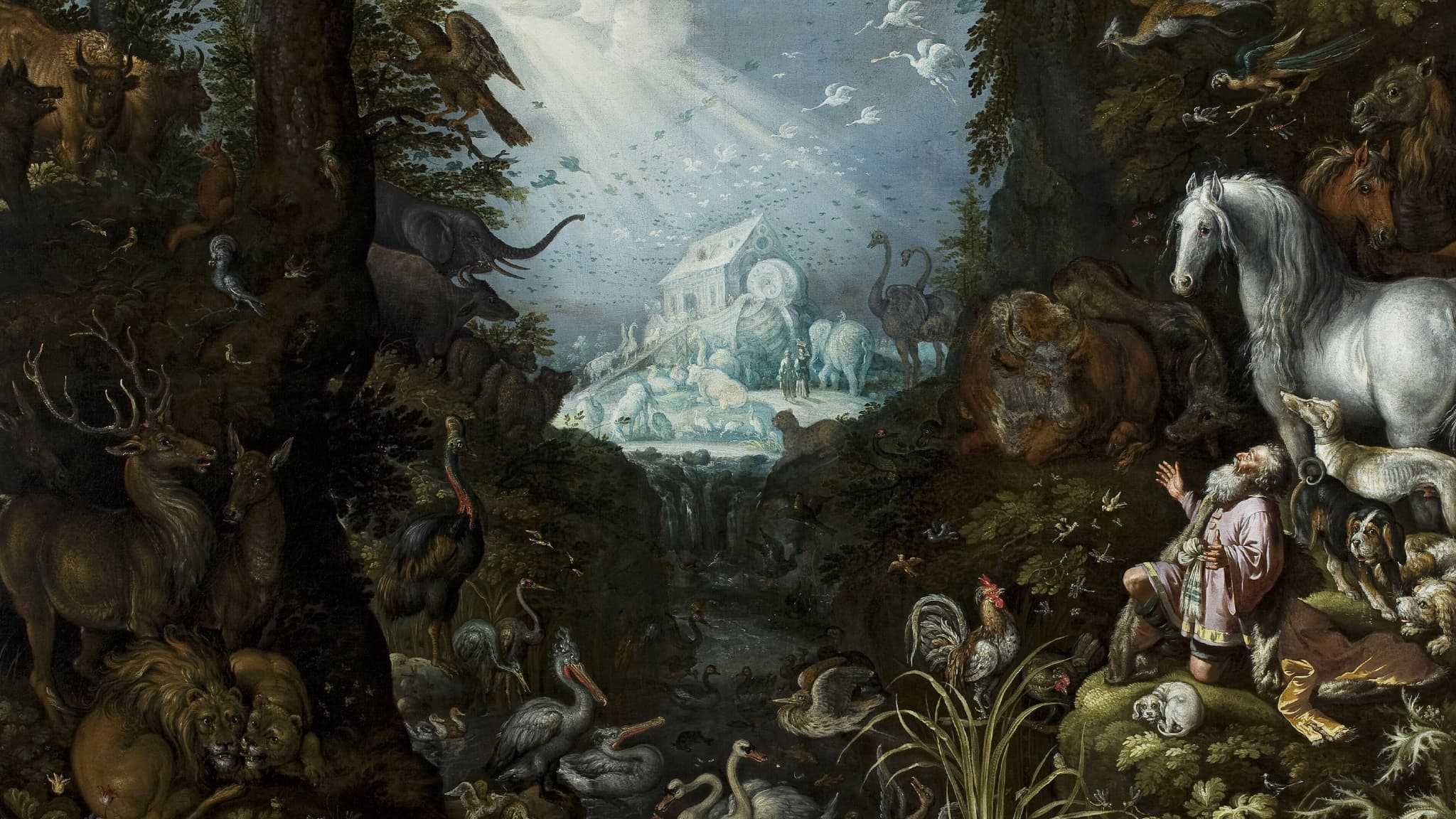
The second floor houses a gallery of the most highly-prized large and small “Histories” (storie) – lofty biblical, mythological, allegorical and literary subjects. On the first floor (in addition to the Gallery of Old Polish and European Portraiture, outlined in its own dedicated guide) the avant-corps of the building holds a gallery of landscapes featuring all of the genre’s many variations – heroic, picturesque, realist-topographical. The ground floor is home to “cabinet” and “salon” paintings addressing more prosaic subject matter: genre scenes, animals and still life. The arrangement of the individual galleries in such a top to bottom configuration reflects the hierarchical pyramid of genres – from the loftiest “histories” all the way to still lifes at the bottom. Visitors can begin their tour with the lowest rungs of the ladder and climb to the high reaches of the large and small “histories,” or vice versa. Here, we shall start from the top.
Discover the digital collections of the National Museum in Warsaw and explore thousands of works of art — from painting and sculpture to prints, photography and decorative arts. Browse objects, artists and collections, learning their history through detailed descriptions and high-quality reproductions. Visit the site and see the richness of the MNW collections from anywhere, at any time.