








Temporary exhibition
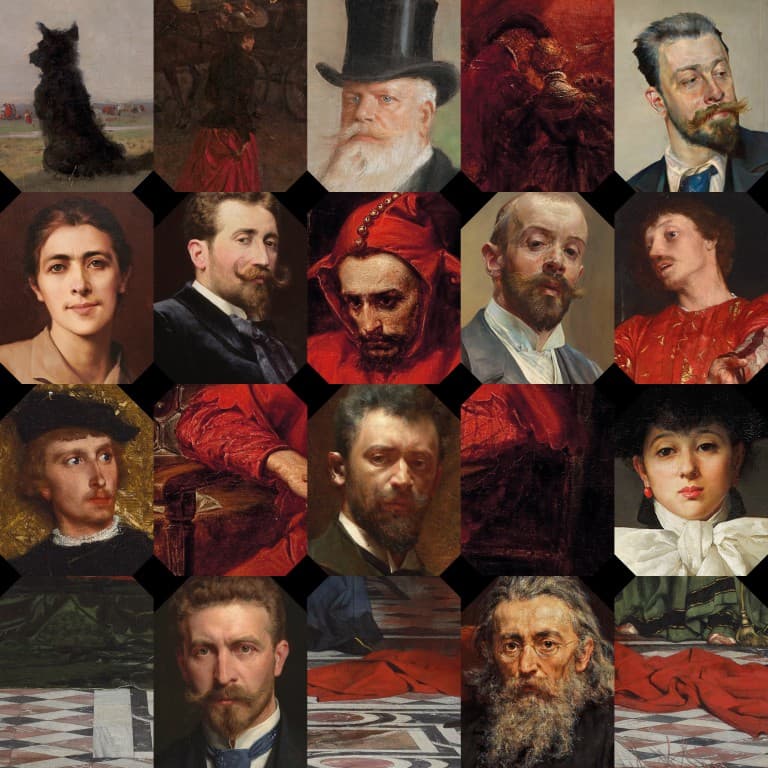
The Collector: Ignacy Korwin-Milewski (1846–1926)
Place: National Museum in Warsaw
Project co-financed by the European Union from the European Regional Development Fund



Audio guides at the National Museum let visitors discover the history and context of the works on display through professionally produced recordings. They make it possible to explore the exhibitions independently, choosing the content that interests you and your own pace of visiting.


Discover the digital collections of the National Museum in Warsaw and explore thousands of works of art — from painting and sculpture to prints, photography and decorative arts. Browse objects, artists and collections, learning their history through detailed descriptions and high-quality reproductions. Visit the site and see the richness of the MNW collections from anywhere, at any time.

14 May – 25 October 2026 Xawery Dunikowski Museum of Sculpture in Królikarnia

 mmajchrzakmmajchrzak
We are proud to announce that the National Museum in Warsaw has received awards in several categories in the 20th anniversary edition of the Mazovian Museum Events – Willow competition.


The year 2026 will see the 180th anniversary of the birth and the 100th anniversary of the death of the esteemed collector and patron of Polish culture, which has already provided an impulse to foreground his achievements. The aim of our exhibition is to showcase the reconstructed collection which – in the wake of the Count’s demise – was dispersed.
Originally, it contained approximately 250 paintings. Korwin-Milewski expertly amassed his collection over the course of 30 years (1880–1910). He commissioned Polish painters – fellow graduates of the Royal Academy of Fine Arts in Munich, where he himself studied for five years. Over the years to come, he cultivated the many friendships with artists made there, extending his patronage to some of them. The artistic level of the gallery curated by Korwin-Milewski is evidenced by the following masterworks: Jan Matejko’s Stańczyk, Józef Chełmoński’s Indian Summer, Aleksander Gierymski’s The Feast of Trumpets or Jewess with Oranges.
Characteristically, the collection featured a set of figurative paintings (primarily self-portraits) by the artists most cherished by Korwin-Milewski. Jan Matejko’s self-portrait headed the list. Korwin-Milewski’s selection is a testament to his unparalleled ability to assess the artistic value of the works he purchased. Time, an arbiter of taste and fashion, only reinforced the quality of his collection. Most of his paintings are indelible masterpieces that have entered the canon of Polish painting.