Project co-financed by the European Union from the European Regional Development Fund



Audio guides at the National Museum let visitors discover the history and context of the works on display through professionally produced recordings. They make it possible to explore the exhibitions independently, choosing the content that interests you and your own pace of visiting.


Discover the digital collections of the National Museum in Warsaw and explore thousands of works of art — from painting and sculpture to prints, photography and decorative arts. Browse objects, artists and collections, learning their history through detailed descriptions and high-quality reproductions. Visit the site and see the richness of the MNW collections from anywhere, at any time.

14 May – 25 October 2026 Xawery Dunikowski Museum of Sculpture in Królikarnia

17 April – 13 September 2026 The National Museum in Warsaw
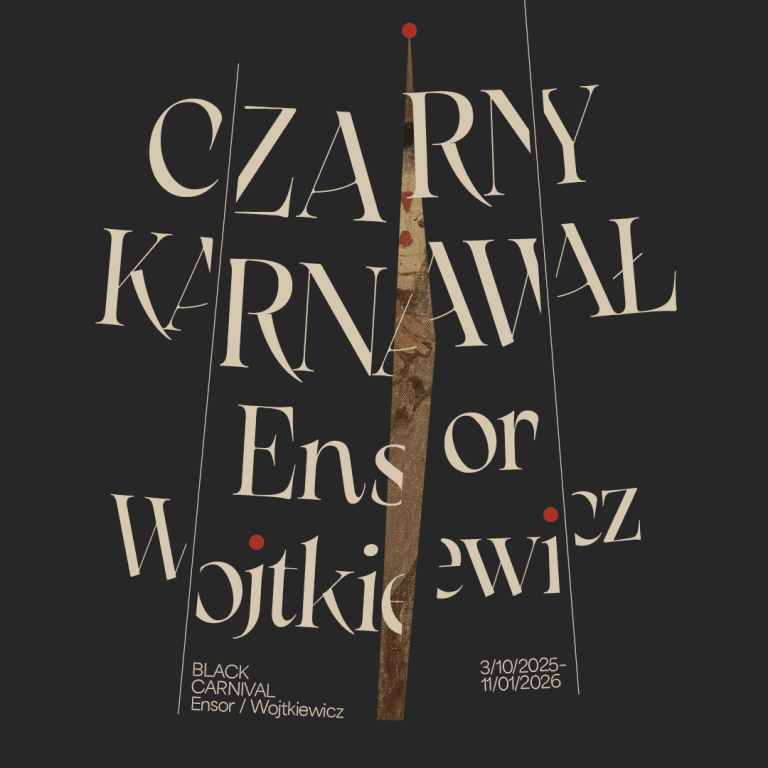
It explores themes of the masquerade, the theatre, the circus, dreams, eroticism and death. Known for their penchant for fantasy, irony and the grotesque, the two painters were deeply rooted in their respective cultures and art circles: the modernist milieus of the Young Belgium and the Young Poland. Ensor evoked the traditions of Dutch art, with its bawdy humour, defiance and didacticism, of folk theater troupes and of the animated street carnivals of Flanders. Wojtkiewicz, submerged in a world of fairytales and dreamlike visions, drew from phenomena such as the cabaret, the comedy theatre Zielony Balonik and Kraków’s folk nativity scenes (szopka).
We offer a playful juxtaposition of these two individuals, who are usually treated as peculiar, isolated cases. The idea of the carnival represents life-as-spectacle, the world turned upside-down, madness, anarchy, chaos, a freedom from norms and conventions. The exhibition is organized by key themes that correspond to major areas in Ensor’s and Wojtkiewicz’s imaginaria, and visualize universal problems in turn-of-the-century art, literature and theatre: Bohemianism; Masqueraders of the Abyss—the Carnival, the Theatre, the Circus; Fairytales and Childhood Fantasies; Thanatos.
Black Carnival. Ensor/Wojtkiewicz is NMW’s first exhibition based on a Polish–Belgian partnership. For context, we will also present marionettes, masks and carnival costumes as well as paintings, drawings and prints by other Polish and Belgian artists who were the two protagonists’ contemporaries.